Showing posts with label Realtor. Show all posts

Wednesday, September 6, 2023

Buyers remorse

Jenn Gregory Bonita Springs REALTOR


Buyer's remorse refers to the feeling of regret or doubt that can occur after making a significant purchase, including buying a house. If you're experiencing buyer's remorse after purchasing a property, here are some steps you can take:

  • Identify the reasons: Reflect on the specific reasons behind your buyer's remorse. Is it due to financial concerns, doubts about the property itself, or feeling overwhelmed by the responsibilities of homeownership? Understanding the root cause of your remorse can help you address it effectively.
  • Review your contract and options: Take a careful look at the contract you signed and familiarize yourself with any contingencies, cancellation clauses, or cooling-off periods that may be available to you. Ask your agent or consult with a real estate attorney to understand the legal implications of reversing or renegotiating the purchase.
  • Consult with professionals: Seek advice from professionals such as financial advisors, or even therapists who can provide guidance based on their expertise. They can help you evaluate your options and provide valuable insights.
  • Consider your financial situation: Assess your financial circumstances and determine the impact of canceling the purchase. Evaluate factors such as potential financial penalties, any non-refundable deposits, and the potential impact on your credit.
  • Communicate with the seller: If you're considering canceling the purchase, it may be worth telling your agent to have an open and honest conversation with the seller's agent. They may be willing to renegotiate the terms or find a mutually agreeable solution.
  • Seek professional appraisal or inspection: If your concerns are related to the condition or value of the property, you may consider getting a professional appraisal or inspection done to get an objective assessment. This information can help you make an informed decision about the property.
  • Explore alternatives: If canceling the purchase is not a feasible option, explore alternatives to address your concerns. This could involve making necessary repairs or renovations, refinancing the mortgage to improve your financial situation, or seeking professional advice on how to maximize the value of the property.
  • Learn from the experience: Use this situation as an opportunity for growth and learning. Take note of the factors that led to your buyer's remorse and apply those lessons in any future purchases.

It's important to note that the options available to address buyer's remorse may vary depending on factors such as the specific circumstances of the purchase, local laws, and contractual agreements. Consulting with professionals and seeking legal advice specific to your situation can provide you with the most accurate and relevant guidance.

Wednesday, August 16, 2023

Why isn't your home selling?

Jenn Gregory MVP Realty

 There could be several reasons why a home is not selling. 

  • Pricing: One of the most significant factors affecting the sale of a home is its price. If the home is overpriced compared to similar properties in the area, potential buyers may be deterred. It's important to consider market conditions, comparable sales, and the home's condition when setting a realistic and competitive price.
  • Condition and Presentation: The overall condition of the home plays a crucial role in attracting buyers. If the property is in poor condition, outdated, or in need of significant repairs, it may struggle to sell. Additionally, the presentation of the home, including cleanliness, staging, and curb appeal, can greatly impact buyers' first impressions.
  • Marketing and Exposure: Insufficient marketing and exposure can limit the number of potential buyers who are aware of the property. Effective marketing strategies, including high-quality photographs, detailed property descriptions, online listings, and engaging in various marketing channels, are essential for reaching a broad audience of potential buyers.
  • Location: The location of the home can significantly influence its marketability. Factors such as proximity to amenities, schools, transportation, and the overall desirability of the neighborhood can impact buyer interest. If the location has limitations or is less desirable, it may take longer to sell.
  • Competition: The level of competition in the real estate market can affect a home's sale. If there are many similar properties available for sale in the area, buyers have more options to choose from, and your home may face increased competition. In such cases, it's important to differentiate your property through pricing, unique features, or staging to attract buyers.
  • Market Conditions: The state of the real estate market, including supply and demand dynamics, can impact the sale of a home. In a buyer's market with high inventory and few buyers, selling a home may take longer. Conversely, in a seller's market with limited inventory and high demand, homes tend to sell more quickly.
  • Agent's Effectiveness: The effectiveness and expertise of the listing agent can also influence the sale of a home. If the agent does not have a strong marketing plan, negotiation skills, or local market knowledge, it may hinder the selling process.

It's crucial to assess these factors and make necessary adjustments to increase the chances of selling your home. Consider consulting with a reputable real estate agent who can provide insights specific to your situation and help devise a tailored strategy to improve the saleability of your home.

Wednesday, August 9, 2023

Buying new construction? Get a buyers agent first. Here's why:

Jenn Gregory MVP Realty

Using a buyer's agent when purchasing a new construction home can provide several important benefits. Here are a few reasons why it is important to consider working with a buyer's agent in such situations:

Expertise and Guidance: A buyer's agent specializes in representing the interests of homebuyers. They have knowledge and experience in the real estate market, including new construction, and can provide valuable guidance throughout the process. They understand the nuances of purchasing a new construction home and can help you navigate the complexities.

Negotiation Power: A buyer's agent is skilled in negotiations and can work on your behalf to secure the best deal possible. They can help you understand the builder's pricing, incentives, and terms, and negotiate on price, upgrades, or other factors that may be important to you. Their objective is to protect your interests and ensure you get the most value for your investment.

Builder Relations: Established buyer's agents often have established relationships with builders and developers. This can be advantageous when purchasing a new construction home because they may have knowledge about upcoming projects, available inventory, or access to special promotions or incentives. They can use their network to gather information and advocate for you.

Contract and Documentation Assistance: Buying a new construction home typically involves a complex set of contracts and documentation. A buyer's agent can review these documents thoroughly, explain the terms and conditions, and help you understand your rights and obligations. They can identify any potential issues and ensure you are protected throughout the transaction.

Building Process Oversight: A buyer's agent can help oversee the construction process. They can attend site visits, inspections, and walk-throughs with you to ensure that the builder is meeting their obligations, addressing any concerns or issues that arise, and ensuring that the construction is progressing as agreed upon.

Local Market Knowledge: A buyer's agent has a deep understanding of the local real estate market, including factors that may impact the value and desirability of a new construction home. They can provide insights into neighborhood trends, future development plans, school districts, and other factors that may influence your decision-making process.

Overall, utilizing a buyer's agent when purchasing a new construction home provides you with professional representation, expertise, and advocacy throughout the process. They can help you make informed decisions, protect your interests, and maximize the value of your investment.

Wednesday, August 2, 2023

The emotional process of home buying

Jenn Gregory REALTOR MVP Realty


Buying a home is an emotional process. Emotions can vary from person to person, but some common stages include:

Excitement: This is the initial stage where the home buyer is excited about the prospect of buying a new home and all the possibilities that come with it.

Anxiety: As the home buyer begins to think more about the process, they may start to feel anxious about the financial and practical aspects of buying a home, such as finding the right mortgage or worrying about potential repairs.

Frustration: The home buying process can be complex and time-consuming, so it's common for buyers to feel frustrated with the many steps involved, from searching for a suitable property to negotiating with sellers and dealing with legal paperwork.

Elation: When a home buyer finds the perfect property and successfully navigates the purchasing process, they may experience a sense of elation and accomplishment.

Fear: Once the purchase is made, some buyers may feel a sense of fear or worry about the financial commitment and responsibility that comes with owning a home.

Relief: Finally, once the buyer settles into their new home and begins to adjust to their new lifestyle, they may feel a sense of relief and satisfaction that they made the right decision. 


Wednesday, July 26, 2023

10 reasons to move to Bonita Springs, Florida

Jenn Gregory Bonita Springs REALTOR


There are many great reasons to consider moving to Bonita Springs, Florida. Here are ten:

Beautiful beaches: Bonita Springs is located on the Gulf of Mexico and is home to beautiful white sand beaches, such as Barefoot Beach and Bonita Beach Park.

Outdoor activities: The area is ideal for outdoor enthusiasts with opportunities for kayaking, fishing, hiking, biking, and golfing.

Warm weather: With an average temperature of 75°F, Bonita Springs offers year-round warm weather.

Cultural attractions: The area has many cultural attractions, such as the Center for the Arts of Bonita Springs and the Naples Philharmonic.

Shopping: Bonita Springs offers a range of shopping options, including outlet malls, boutique stores, and farmers markets.

Dining options: There is no shortage of dining options in Bonita Springs, with a wide range of restaurants offering everything from seafood to Italian cuisine.

Health and wellness: Bonita Springs is home to many health and wellness centers, including spas, yoga studios, and fitness centers.

Family-friendly: The area is family-friendly with many parks, playgrounds, and family-oriented activities.

Retirement community: Bonita Springs is a popular retirement destination, with many retirement communities and senior living options available.

Convenient location: Bonita Springs is conveniently located close to major cities such as Fort Myers and Naples, making it easy to access additional amenities and services.

Overall, Bonita Springs offers a high quality of life with beautiful beaches, outdoor activities, cultural attractions, and a range of shopping and dining options.


Wednesday, July 19, 2023

Tips for buying an airbnb property in Naples, Florida

Jenn Gregory Bonita Springs REALTOR

If you're considering buying an Airbnb property in Naples, Florida, here are some tips to help you make an informed decision:

Research the market: Before purchasing an Airbnb property in Naples, Florida, research the local market to ensure that there is a demand for short-term rentals in the area. Look at occupancy rates, average nightly rates, and local regulations to ensure that an Airbnb property is a viable investment.

Consider location: The location of your Airbnb property is critical to its success. Choose a location that is close to popular tourist attractions, restaurants, and shopping centers.

Check zoning laws: Make sure that the property you're interested in is zoned for short-term rentals. Some neighborhoods or condo associations may have restrictions on short-term rentals, so be sure to check local zoning laws and regulations.

Evaluate the property: Inspect the property thoroughly to ensure that it's in good condition and meets the needs of Airbnb guests. Look for features that will appeal to travelers, such as a pool, outdoor space, or proximity to the beach.

Analyze the financials: Consider the potential income and expenses of the property, including mortgage payments, property taxes, insurance, maintenance costs, and Airbnb fees. Use a rental income calculator to estimate the potential income and determine if the property is a good investment.

Hire a property manager: Consider hiring a property manager to handle the day-to-day operations of your Airbnb property. A property manager can handle guest inquiries, bookings, cleaning, and maintenance, freeing up your time and reducing the stress of managing an Airbnb property.

Be prepared for fluctuations in demand: Demand for short-term rentals can fluctuate throughout the year, so be prepared for seasonal variations in occupancy rates and nightly rates. Plan accordingly by adjusting your pricing and marketing strategy to maximize your occupancy and revenue.

By following these tips, you can make an informed decision when buying an Airbnb property in Naples, Florida, and increase your chances of success as an Airbnb host.

Wednesday, May 31, 2023

Is your Realtor really helping you?

Jenn Gregory Bonita Springs Realtor

It depends on the individual realtor and the level of service they provide. A good realtor should be knowledgeable about the local housing market, have good communication skills, and be able to guide you through the buying or selling process. They should be able to provide you with valuable insights into the local housing market, help you find properties that meet your criteria, and negotiate a fair price for you.

Some of the ways a good realtor can help you include:

Access to the MLS: A good realtor will have access to the Multiple Listing Service (MLS), which is a database of properties for sale in the area. This can help you find properties that meet your criteria quickly and efficiently.

Negotiation skills: A good realtor should be able to negotiate a fair price for you and work with the seller's agent to make sure the transaction goes smoothly.

Knowledge of the local market: A good realtor should have a good understanding of the local market and be able to provide you with valuable insights into the neighborhood, school district, and other factors that could impact your buying or selling decision.

Paperwork and legalities: A good realtor should be familiar with the legal requirements and paperwork involved in buying or selling a home and be able to guide you through the process.

However, not all realtors are created equal, and some may not provide the level of service that you expect. It's important to do your research and choose a reputable realtor with a good track record and positive reviews from previous clients. It's also important to communicate your expectations and needs clearly with your realtor to ensure that they are able to provide you with the level of service you require.

Wednesday, May 24, 2023

Tips for timing the sale and purchase of your homes


Jenn Gregory Bonita Springs Realtor

Timing the sale of your current home and the purchase of a new home can be a tricky process, but there are several factors to consider that can help you make a smart decision. Here are some tips to help you time the selling of your current home and purchasing a new home:

Research the current housing market 
Research the current housing market in your area to determine whether it's a buyer's market or a seller's market. If it's a seller's market, you may want to sell your current home first to take advantage of the high demand and potentially higher sale prices. However, if it's a buyer's market, you may want to purchase your new home first before selling your current home to take advantage of lower prices and potentially negotiate a better deal.

Consider your financing options
If you're planning to purchase a new home before selling your current home, you may need to consider your financing options. You may need to obtain a bridge loan or a home equity line of credit (HELOC) to finance the purchase of your new home while you wait for your current home to sell.

Coordinate closing dates
Try to coordinate the closing dates of your current home and your new home as closely as possible. This will help you avoid having to pay two mortgages at the same time or being without a place to live if your current home sells before you can move into your new home.

Hire a real estate agent
Hiring a reputable and experienced real estate agent can help you navigate the process of selling your current home and purchasing a new home. Your agent can help you understand the current housing market, coordinate closing dates, and negotiate the best deals for you.

Ultimately, the decision of when to sell your current home and purchase a new home will depend on your personal financial situation, the current housing market, and your long-term goals. It's important to carefully consider all of these factors before making a decision.

Wednesday, May 17, 2023

Top Home Seller Myths

Jenn Gregory Bonita Springs Realtor

 There are many myths surrounding the home selling process. Here are some of the top home seller myths:

1) You can sell your home for the price you want
While it's natural to want to sell your home for as much as possible, the market ultimately determines the price. Overpricing your home can turn off potential buyers and cause your home to sit on the market for a long time.

2) You should always renovate your home before selling
While some home improvements can increase your home's value, not all renovations are worth the investment. It's important to weigh the costs of the renovation against the potential increase in value.

3) You don't need to stage your home
Staging your home can help it sell faster and for a higher price. It can help potential buyers visualize themselves living in the home and make your home stand out in a crowded market.

4) You don't need a real estate agent 
While it's possible to sell your home without a real estate agent, it can be a challenging and time-consuming process. A good agent can provide valuable insights into the local market, help you price your home correctly, and handle the paperwork and negotiations.

5) Open houses are the best way to sell your home
While open houses can attract potential buyers, they're not always the most effective way to sell your home. Many serious buyers prefer to schedule private showings, and some experts even argue that open houses can attract nosy neighbors and curious onlookers instead of serious buyers.

6) You should only sell your home in the spring or summer
While the spring and summer are traditionally considered the best time to sell a home, there's no guarantee that your home will sell quickly or for a good price during these seasons. In fact, selling in the off-season can sometimes help your home stand out in a less crowded market.

Wednesday, March 15, 2023

Everything you need to know about Florida property taxes

Jenn Gregory - Bonita Springs Realtor

Florida is known for its sunny weather, beaches, and theme parks, but it's also known for having some of the lowest property tax rates in the country. If you're considering buying property in Florida, it's important to understand how property taxes work and how they can affect your budget.

How Property Taxes are Calculated in Florida

In Florida, property taxes are based on the assessed value of the property and the millage rate, which is the tax rate used to calculate the tax amount. The assessed value is determined by the local property appraiser's office and is based on the fair market value of the property. The millage rate is set by local government officials and is typically expressed as a percentage of the assessed value.

For example, if the assessed value of your property is $200,000 and the millage rate is 2%, your property tax bill would be $4,000 per year ($200,000 x 0.02).

Homestead Exemption

One of the benefits of owning property in Florida is the homestead exemption, which provides a discount on property taxes for homeowners who use the property as their primary residence. The homestead exemption can reduce the assessed value of the property by up to $50,000, which can result in significant savings on property taxes.

For example, if the assessed value of your property is $200,000 and you qualify for the homestead exemption, your assessed value would be reduced to $150,000, which would lower your property tax bill by $500 per year (assuming a millage rate of 2%).


Other Exemptions and Deductions

Florida also offers other exemptions and deductions that can reduce your property tax bill, including:

Senior exemption: Provides a discount on property taxes for homeowners who are 65 or older and meet certain income and residency requirements.

Disability exemption: Provides a discount on property taxes for homeowners who are disabled and meet certain income and residency requirements.

Veteran exemption: Provides a discount on property taxes for veterans who have a service-related disability or were honorably discharged and meet certain residency requirements.

Portability: Allows homeowners to transfer their accumulated homestead exemption to a new home if they move within the state.

Property Tax Due Dates

In Florida, property taxes are due on November 1st and become delinquent if not paid by April 1st of the following year. It's important to budget for property taxes and pay them on time to avoid penalties and interest charges.

Florida's property tax rates are among the lowest in the country, and the homestead exemption and other deductions can help homeowners save money on their property tax bill. It's important to understand how property taxes are calculated and to budget accordingly to avoid any surprises. Consulting with a local real estate agent or tax professional can provide valuable insights into the local market and tax laws.

Monday, March 13, 2023

5 Negotiation Secrets Smart Buyers Use to Get Better Deals

Jenn Gregory - Bonita Springs Realtor

When it comes to buying a home, negotiation skills can be key to getting the best deal. Here are five negotiation secrets that smart buyers use to get better deals:

1. Do your research
Before you make an offer, it's important to do your research and understand the local housing market. Look at recent sales in the area and compare the features and prices of similar homes to get a sense of what's reasonable. This will help you make a more informed and confident offer.

2. Be willing to walk away
While it's important to be persistent in negotiations, it's also important to be willing to walk away if you can't get the deal you want. This can give you more bargaining power and may even prompt the seller to reconsider their position.

3. Keep emotions in check
Buying a home can be an emotional process, but it's important to keep emotions in check during negotiations. Stay focused on the facts and the bottom line, rather than getting caught up in the emotional appeal of a particular property.

4. Use a professional
Working with a professional real estate agent or attorney can give you an advantage in negotiations. These professionals have experience negotiating deals and can provide guidance and support throughout the process.

5. Look for win-win solutions
The best negotiations result in win-win solutions for both parties. Rather than trying to "win" every point, look for solutions that meet the needs of both parties and allow for a successful transaction.


By using these negotiation secrets, buyers can increase their chances of getting a better deal on their next home purchase.

Sunday, March 12, 2023

What is escrow?

Jenn Gregory - Bonita Springs Realtor


Escrow refers to a financial arrangement in which a third party holds and manages funds or assets on behalf of two parties that are involved in a transaction. Escrow is commonly used in real estate transactions, but it can also be used in other situations, such as online sales, intellectual property transfers, and legal settlements.

In a real estate transaction, an escrow account is typically created by the buyer's real estate agent, attorney, or lender, and is used to hold the buyer's deposit until the sale is finalized. This deposit is typically referred to as "earnest money," and is intended to demonstrate the buyer's commitment to the purchase.

Once the sale is finalized, the funds in the escrow account are released to the seller, and the property is transferred to the buyer. If the sale falls through for any reason, the funds in the escrow account may be returned to the buyer, subject to the terms of the purchase agreement.

Escrow accounts can also be used to hold funds for property taxes, insurance, and other expenses related to the property. In these cases, the lender may require the borrower to make monthly payments into an escrow account, which will be used to pay these expenses on the borrower's behalf.

The use of escrow can help to protect both parties in a transaction by ensuring that the funds are held by a neutral third party, and are only released when certain conditions are met. Escrow can also help to simplify the transaction process by consolidating all of the funds and paperwork into a single account.

Overall, escrow is an important tool in real estate transactions and other financial transactions, and can help to ensure that the process goes smoothly and all parties are protected.

Saturday, March 11, 2023

Is there a best time to buy a home?

Jenn Gregory - Bonita Springs Realtor


There isn't necessarily a "best" time to buy a home, as the housing market can vary depending on a variety of factors such as location, seasonality, and economic conditions. However, there are a few things to consider when timing your home purchase:

Market conditions: Pay attention to market trends and conditions, such as inventory levels, interest rates, and home prices in your area. If there are more homes for sale than buyers, you may be able to negotiate a better deal. Conversely, if there are more buyers than homes for sale, you may face more competition and higher prices.

Seasonality: In some areas, home prices may fluctuate seasonally. For example, in areas with harsh winters, there may be fewer buyers in the winter months, which could result in lower prices or more negotiation room. However, in areas with mild climates, there may not be much seasonal variation.

Personal circumstances: Consider your own personal circumstances, such as your job stability, financial situation, and family needs. If you're planning to move in the near future or your financial situation is uncertain, it may be better to wait to purchase a home.

Ultimately, the decision to buy a home should be based on your individual circumstances and goals, rather than trying to time the market. It's important to work with a knowledgeable real estate agent and mortgage lender who can help you navigate the market and find the right home for your needs and budget.

Friday, March 10, 2023

Why Zillow's "Zestimates" may be innacurate

Jenn Gregory - Bonita Springs Realtor

Zillow Zestimates are estimates of a property's value based on various data points and algorithms, including recent sales, tax assessments, and property characteristics. However, these estimates can sometimes be inaccurate or misleading for a variety of reasons, including:

Lack of access to current data: Zillow may not have access to the most current data about a property, such as recent renovations or upgrades that could affect the value.

Inaccurate data: Zillow's estimates rely on public records and other data sources, which can sometimes be outdated or inaccurate.

Limited accuracy in certain markets: Zillow's algorithm may not be as accurate in certain markets, such as rural areas or areas with a wide range of property types.

Unique or unusual properties: Zillow's algorithm may not be able to accurately estimate the value of unique or unusual properties that don't fit the typical mold.

Market fluctuations: Zillow's estimates are based on past sales and market trends, but they may not account for sudden changes in the market or local economic conditions.

It's important to remember that Zillow Zestimates are just estimates, and should not be relied on as a definitive valuation of a property. A professional appraisal or evaluation by a licensed real estate agent is typically more accurate and reliable.

Thursday, March 9, 2023

Common lies Realtors tell new buyers

Jenn Gregory - Southwest Florida Realtor

It's important to note that the vast majority of realtors are honest and ethical professionals who work hard to help their clients buy or sell a home. However, there are always exceptions, and some realtors may tell lies or stretch the truth to make a sale. Here are some common lies that realtors may tell new buyers:


"This home won't last long on the market": While it's true that some homes may sell quickly, realtors may use this line to create a sense of urgency and pressure buyers into making an offer before they're ready. It's important for buyers to take their time and do their due diligence before making an offer.


"This is the best deal you'll find": Realtors may use this line to pressure buyers into making an offer quickly, even if it's not the best deal for their needs and budget. Buyers should always do their research and compare prices before making an offer.


"This home has no issues": Realtors may downplay or ignore issues with a home in order to make a sale. Buyers should always get a home inspection and review any disclosures to ensure they know about any issues with the property.


"I'm not making a commission on this sale": Realtors may tell this lie to make buyers think they have their best interests at heart. However, it's important to remember that realtors are typically paid a commission on the sale of a home, so it's in their best interest to make a sale.


"This is a hot market, so you need to act fast": While it's true that some markets may be more competitive than others, realtors may use this line to pressure buyers into making an offer before they're ready. Buyers should always take their time and make a decision based on their own needs and budget.


Buyers should always be cautious and do their own research before making a purchase. If they suspect their realtor is lying or being dishonest, they should consider finding a new agent who will work in their best interests.

Wednesday, March 8, 2023

What is dual agency?

Jenn Gregory - Naples Florida Realtor

Dual agency is a real estate practice where a single agent or broker represents both the buyer and seller in a transaction. In Florida, dual agency is not illegal, but it is highly regulated and discouraged by the state's real estate licensing laws.

The state of Florida allows for "designated agency," where a brokerage firm can designate different agents within the firm to represent the buyer and seller in a transaction. This allows for each party to have their own agent, while still working under the same brokerage.

However, dual agency is not allowed in Florida because it creates a conflict of interest. When one agent represents both the buyer and seller, they may prioritize their own interests over those of their clients. This can create an unfair advantage for one party, leading to potential legal issues.

Additionally, dual agency can make it difficult for the agent to provide objective advice to both parties, as they have a duty to act in the best interests of both the buyer and seller.

To avoid conflicts of interest and ensure a fair transaction, Florida's real estate licensing laws require agents to provide full disclosure to their clients and avoid any actions that could be perceived as a breach of their fiduciary duty. By working under designated agency, agents can represent their clients while avoiding conflicts of interest and maintaining a high level of professionalism.

Tuesday, March 7, 2023

7 tips for buying investment properties

Jenn Gregory - Naples Florida Investment Properties

 Buying a rental property can be a smart investment, but it's important to approach the process carefully and strategically to maximize your returns.


Here are seven tips for buying rental properties:

1) Do your research: Before buying a rental property, research the local market to determine what types of properties are in demand and what rents are like in the area. This will help you find a property that is likely to be profitable.

2) Consider the location: Location is a critical factor in the success of a rental property. Look for properties in safe, desirable neighborhoods that are close to amenities like public transportation, shopping, and schools.

3) Crunch the numbers: Calculate the potential return on investment by estimating the rental income, expenses, and potential appreciation of the property. This will help you determine if the property is a good investment.

4) Get pre-approved for financing: Talk to lenders to determine how much financing you can obtain for the property. Getting pre-approved will give you a clear idea of your budget and help you avoid wasting time looking at properties that are outside your price range.

5) Consider the property's condition: Inspect the property thoroughly to identify any repairs or renovations that may be needed. These costs will impact your overall investment, so it's important to budget for them appropriately.

6) Hire a property manager: Consider hiring a property manager to handle the day-to-day operations of the property, including finding tenants, collecting rent, and managing repairs. This will help ensure the property is well-maintained and profitable.

7) Build a team: Establish relationships with professionals like real estate agents, property managers, and contractors who can help you find and manage rental properties effectively.

Buying a rental property can be a smart investment, but it's important to approach the process with care and thoroughness to maximize your chances of success. By following these tips, you can find a profitable rental property that meets your needs and goals.

Monday, March 6, 2023

Architectural styles in Naples, Florida

Jenn Gregory - Naples Florida Real Estate

Naples, Florida features a variety of architectural styles, ranging from historic to modern. Here are some of the most popular architectural styles found in Naples:

Mediterranean Revival: This style is characterized by red tile roofs, stucco walls, and wrought-iron balconies. It often features arched windows and doorways, and is a popular choice for luxury homes in Naples.

Spanish Colonial: Similar to Mediterranean Revival, this style is characterized by stucco walls, red tile roofs, and arched windows and doorways. It often features decorative tile work and ornate ironwork.

Coastal: This style is characterized by light, airy interiors, and features a color palette inspired by the beach. It often includes large windows to take advantage of coastal views and breezes.

Old Florida: This style is characterized by wraparound porches, tin roofs, and simple, wooden construction. It often features shutters and painted finishes.

Contemporary: This style is characterized by clean lines, simple forms, and an emphasis on natural light. It often features large windows and open floor plans.

Key West: This style is characterized by pastel colors, wood construction, and tin roofs. It often features balconies and porches, and is a popular choice for beachfront properties.

Naples is known for its upscale homes and luxurious living, and these architectural styles are just a few of the many options available to residents and visitors alike.

Sunday, March 5, 2023

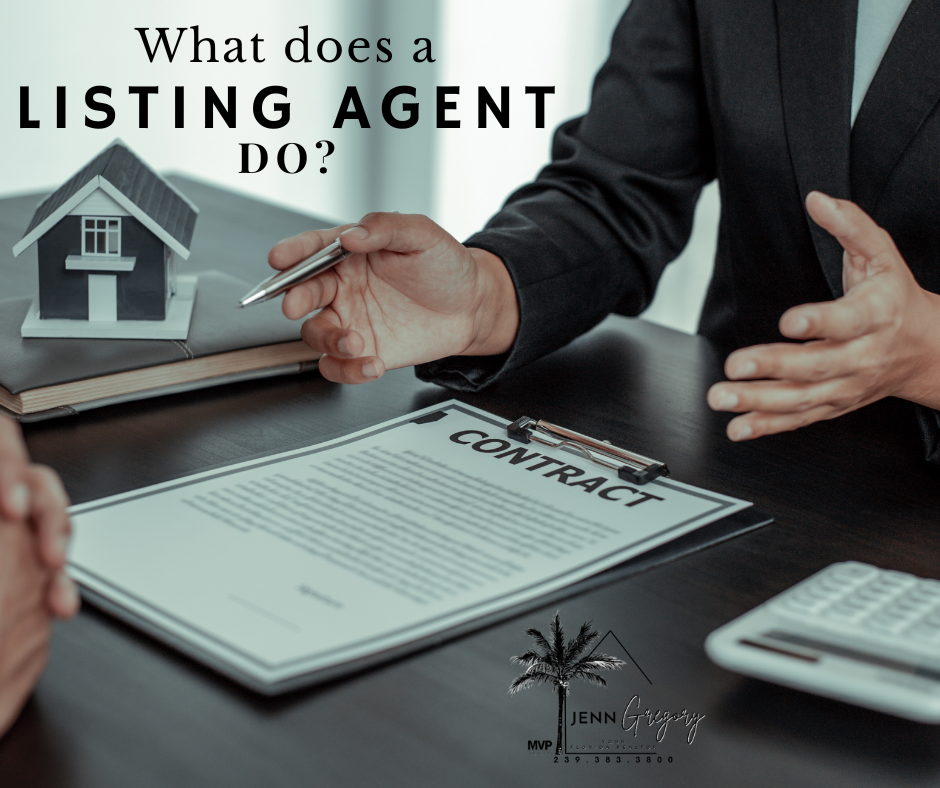
What does a listing agent do?

Jenn Gregory - Bonita Springs Realtor


Listing agents are real estate agents who work with home sellers to help them prepare their homes for sale, market the property, and negotiate offers from potential buyers. Here are some of the key tasks that a listing agent may perform:


Property valuation: A listing agent will help the seller determine an appropriate price for the home based on the local market conditions, the condition of the property, and other factors.


Home preparation: A listing agent will help the seller prepare their home for sale by recommending repairs or upgrades that can increase the home's appeal to buyers.


Marketing: A listing agent will create a marketing plan to promote the property to potential buyers, including listing the property on the MLS, creating online listings, and staging the home for photos and showings.


Open houses and showings: A listing agent will schedule and host open houses and showings to allow potential buyers to view the property.


Negotiation: A listing agent will help the seller evaluate offers from potential buyers and negotiate the terms of the sale, including the purchase price, closing date, and any contingencies.


Contract and closing: A listing agent will work with the seller and their attorney to review and sign the purchase agreement and ensure that all necessary paperwork is completed for the closing.


Overall, a listing agent's goal is to help the seller sell their home quickly and for the best possible price. They use their knowledge of the local market, their marketing expertise, and their negotiation skills to achieve this goal.

Saturday, March 4, 2023

6 smart tips for first time home buyers

First time buyers - Jenn Gregory


Buying your first home can be an exciting and overwhelming experience. As a first-time homebuyer, it’s important to be prepared and knowledgeable about the process. In this blog post, we’ll provide you with some tips and information to help you navigate the world of real estate and find your dream home.

1. Determine your budget Before you start house hunting, it’s essential to determine your budget. This will help you narrow down your search and prevent you from wasting time looking at homes that are out of your price range. It’s important to factor in all of the costs associated with buying a home, including the down payment, closing costs, and monthly mortgage payments.

2. Get pre-approved for a mortgage Getting pre-approved for a mortgage can give you a clear idea of how much you can afford to spend on a home. It can also make the home buying process smoother and faster by showing sellers that you’re a serious buyer. It’s recommended to get pre-approved for a mortgage before you start house hunting.

3. Work with a real estate agent.  A real estate agent can be a valuable resource for first-time homebuyers. They can help you find homes that fit your budget and needs, negotiate with sellers on your behalf, and guide you through the home buying process. Look for a reputable agent who has experience working with first-time homebuyers.

4. Consider the location When buying a home, location is everything. Consider factors like the neighborhood, school district, and commute time to work. It’s also important to think about the potential resale value of the home in the future.

5. Don’t skip the home inspection A home inspection is a crucial step in the home buying process. It can uncover any potential issues with the home, such as structural damage or mold, that could cost you money in the long run. Don’t skip the home inspection, even if the home seems perfect on the surface.

6. Be prepared for closing costs Closing costs can add up quickly and include expenses like appraisal fees, title insurance, and attorney fees. Make sure you budget for these costs and factor them into your overall budget.

Buying your first home can be a complex process, but with the right preparation and guidance, you can find the home of your dreams. Keep these tips in mind as you start your home buying journey, and remember to take your time, ask questions, and make informed decisions. Good luck!

2025 Market predictions for Southwest Florida

What to Expect from Mortgage Rates and Home Prices in Southwest Florida in 2025 As we look ahead to 2025, many are wondering where the housi...